A flashlight is useful until the job requires both hands. A headlamp lets you read a map, sort equipment, work around a vehicle, or follow a dark trail without holding a light in your teeth or asking someone else to aim it.
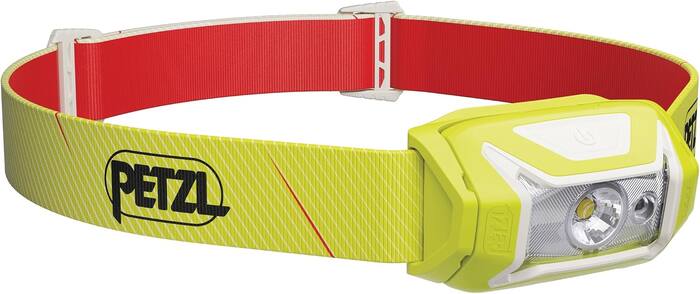
I have kept a Petzl Tikka in my ski-patrol pack and climbing packs for years. It is compact enough to leave packed until it is needed, and the three white-light levels are genuinely useful: low for close work, a middle setting for routine movement, and high when more reach is necessary.
Red light is more than a novelty
The red setting is particularly useful for reading a map at night. It provides enough light to work without the same abrupt loss of dark adaptation caused by a bright white beam. It also reduces the chance of shining an unnecessarily bright light into a partner’s face.
The current Tikka offers continuous and flashing red modes. For ordinary map reading and close work, the steady red mode is the useful one; flashing is better reserved for signaling.
Why the current 350-lumen Tikka
The current AAA-powered Tikka has three white-light levels, a wide proximity beam, a lock function to prevent accidental activation in a pack, and a phosphorescent reflector that makes the lamp easier to locate in the dark. It can also accept Petzl’s optional CORE rechargeable battery.
My long-term experience spans the Tikka family, which Petzl has updated over the years. The exact product linked here is the current yellow, 350-lumen model—not the more expensive rechargeable Tikka Core—and I do not want to imply that every older Tikka has this exact specification.
What it does not replace
The Tikka is designed around a broad, comfortable beam for seeing nearby. It is not a high-output search light, vehicle spotlight, or replacement for specialized scene lighting. For distance searches or prolonged operations, carry the light appropriate to that job.
As a compact backup or everyday pack light, however, it is easy to recommend. It works for ski patrollers, search-and-rescue volunteers, medics who may work away from the road, and anyone whose shift sometimes continues after the lights go out.
Interested in this recommendation?
Check price on Amazon